Quality Standards to Consider in Aluminium Fabrication in UAE
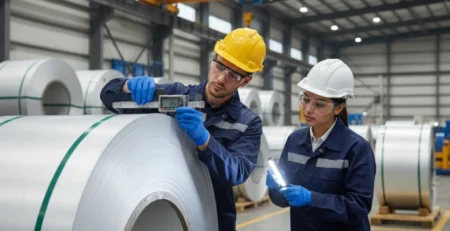
Maintaining good quality control (QC) is an imperative process in any aluminium fabrication in UAE. Therefore, it ensures the final product meets the needed quality standards. In the aluminum or metal fabrication industry, quality control involves maintaining and monitoring quality throughout the manufacturing process by inspecting, evaluating, and testing raw materials, components, and finished products to prevent quality issues. Aluminium fabrication has become a vital backbone of contemporary construction and industrial development in the United Arab Emirates. With rapid urban growth and creative architecture, the demand for lightweight, durable materials continues to grow.
Aluminium and metal fabrication in UAE stand out due to their remarkable strength-to-weight ratio and corrosion resistance, which makes them an ideal choice for sustainable use. Moreover, in this comprehensive blog, we will discuss the fundamental quality standards that every contractor, engineer, and property owner should check before purchasing it from a reliable manufacturer.
Check Out the Quality Standards in Aluminium Fabrication in UAE
Obtaining a quality aluminium fabrication product involves much more than cutting, molding, and joining metal pieces together. It is a lengthy, meticulous process that involves many steps, each of which should be performed with care and attention to detail to achieve the desired outcome. Moreover, let’s discuss quality standards that you must consider in aluminium fabrication in UAE:
1. Material certification and quality (ISO 10204/ASTM)
It all begins with the material quality. As various projects may require different aluminum types and grades, proper selection is key to producing a good product. Low-quality or inappropriate aluminium leads to weaker structures, faulty connections, or the premature failure of products. That is why suppliers issue a Material Test Certificate (MTC). It provides information on chemical composition, hardness, tensile strength, and other properties, demonstrating that the chosen material is suitable for further use in the project.
2. Dimensional accuracy and tolerance (ISO 2768/ISO 12020)
In aluminium fabrication in UAE, even a small error in measurements can lead to significant problems in subsequent stages of the work. Components must meet the dimensions specified in the provided drawings to fit during assembly. To ensure proper tolerance, fabrication companies calibrate CNC and laser-cutting machines and conduct additional measurements using a Coordinate Measuring Machine (CMM). Compliance with tolerance specifications helps prevent problems during the installation of the structures and ensures proper functioning.
3. Welding quality standard (AWS D1.2 / ISO 3834)
Unlike the welding of ordinary metal, working with aluminium poses many difficulties because of its fast reaction to heat. Improper handling results in defects such as cracks, weak joints, porosity, and others. That is why it is crucial to follow specific standards such as AWS D1.2 and ISO 3834 in metal fabrication in UAE. Following the prescribed procedure is essential. Besides, welders must be certified specialists who are capable of working in accordance with the adopted standard. In addition, inspections of the welding process include visual checking as well as the use of non-destructive testing methods.
4. Surface finish and coating integrity (ISO 7599/ISO 2360)
Surface finishing of aluminum structures is an effective way to enhance product visual appeal and corrosion resistance. For instance, the application of anodization or powder coating is quite common when it comes to working with aluminium products. Besides, appropriate standards allow checking whether the coat was applied in the correct amount without errors such as peeling, cracks, bubble formation, or discoloration. For example, ISO 7599 specifies proper finishing requirements for coated aluminium products.
5. Structural integrity and load bearing (EN 1090/ISO 6892)
When constructing elements or structures that must carry weight, safety becomes the primary concern in metal fabrication in UAE. Thus, a certain aluminium part has to be able to withstand considerable loads. In this regard, standards such as EN 1090 are essential because they guarantee appropriate structural characteristics. The use of tensile and impact resistance tests also provides valuable information about the material’s capacity. Thus, standards ensure proper performance.
6. Fabrication process documentation and control (ISO 9001)
Although obtaining aluminium products may seem to imply only their proper manufacturing, the whole process itself requires documentation. Such a system includes the inspection of the received material, manufacturing processes, and final quality assurance. Following ISO 9001 standards allows for tracking each stage of production and making necessary improvements to the manufacturing process of aluminium fabrication in UAE. It provides a higher degree of quality control, helps to identify potential problems in the process, and increases customer confidence.
7. Final assembly and cleanliness check
After all necessary alterations to the product have been made, the final inspection stage begins. Specialists inspect for any problems in assembly and ensure that all parts fit well. In addition, specialists pay close attention to the product’s final appearance and check whether it is infected with dust, oil, or other debris. Once all requirements are met, the product is issued with an inspection report authenticating it.
Which Industries Use Aluminium or Metal Fabrication in the UAE?
Aluminium and metal fabrication in UAE is the foundation of industrial, construction, and infrastructure sectors, with high demand driven by rapid development, urbanization, and the UAE Vision 2030. Furthermore, here are the primary industries using metal and aluminium fabrication in UAE:
- Construction and Architecture
- It is used for steel beams, frames, industrial sheds, columns, and mezzanines.
- It is extensively used for windows, facades, louvers, cladding, curtain walls, frames, balustrades, and handrails.
- Custom screens, gates, and panels for architectural finishes.
- Oil & Gas and Petrochemical
- It is used for pressure vessels, storage tanks, skid structures, pipe spools, and custom manifolds.
- It is used for pipe racks, offshore, and clamp platform structures.
- Marine and Shipbuilding
- It is used for marine-grade aluminium fabrication, tank coating, pipework, structural marine, and ship repair parts.
- It is extensively used for machining, welding, and structural repairs for a wide range of facilities.
- Manufacturing and Heavy Industry
- Aluminium fabrication is remarkably growing in demand for its lightweight factors and custom car parts
- It is used for machinery supports, platforms, ducts, and conveyor systems.
- It is used for stainless steel fabrication for hygiene-sensitive processing equipment.
Final Words!
Choosing the right metal or aluminium products holds a lot of technical specifications. As a contractor, engineer, or property owner, you have to be very mindful of the manufacturing company you choose, where the process of aluminium fabrication in UAE is optimized with high-end technological machinery. However, if you are still unsure which manufacturer to opt for, look no further than Metal n Machine. We offer a wide range of aluminium and metal fabrication products that meet your quality standards without exceeding your budget.
Connect with our team today for more precise details about our widely used products across various industries, including construction, residential, and industrial.
Frequently Asked Questions
Quality aluminium fabrication is always characterized by high adherence to some important quality standards. In the UAE, aluminium fabricators must adhere to internationally recognized standards such as ISO 9001, AWS D1.2, ISO 3834, and EN 1090, among others. Adhering to these standards helps ensure that the fabrication process results in high-quality products.
ISO certification indicates that a company’s fabrication process involves high levels of quality control throughout production. It also demonstrates the company’s commitment to providing high-quality services and satisfaction.
Benefits of choosing ISO-certified fabrication companies include:
- Higher quality control measures at all stages of the fabrication process
- Low chances of having manufacturing defects
- Adequate inspection and documentation
- Improved safety and operational standards
- Reliability for commercial and industrial projects
It is necessary to conduct extensive research on aluminum fabrication firms. Some factors to consider when selecting a fabrication company include industry experience, equipment, qualified and certified welders, and previous projects. You will also need to evaluate the company based on the quality standards it uses and its test certificates.
Many industries in the UAE widely use aluminum and metal fabrication for their strength and durability.
Common industries using aluminium and metal fabrication include:
- Construction/architectural projects
- Oil and gas facilities
- Shipbuilding/marine industries
- Manufacturing and heavy industries
- Automobile/transportation industries
- Commercial/infrastructure construction
The common defects in aluminum and metal fabrication include cracking, defective joints, poor finish and coatings, surface imperfections, and dimensional inaccuracies, among other defects. Most of these problems arise when fabrication companies use poor materials and processes.